


Activities · Whale Watching
Whale Watching on Maui
The humpback whale migration: when to go, where to watch, and what you'll see.
The Migration
A Spectacle You Can't Miss
Every year, thousands of humpback whales make the 3,000-mile journey from the cold feeding waters of Alaska to the warm, sheltered waters of Maui. They come to mate, give birth, and raise their calves in the protected channels and bays that surround the island. For locals and visitors alike, whale season is the most magical time of year: the ocean comes alive with the sound and sight of these gentle giants.
Maui is widely considered the best place in the world for humpback whale watching. The shallow Au'au Channel between Maui, Lanai, and Molokai creates a natural nursery where mothers and calves rest, rest, and play in full view of the shoreline.
When to Go
Whale Season: November through May
The humpback whale migration follows a predictable rhythm. Here is what to expect month by month.
Early Season
November
First arrivals
The first whales begin arriving from Alaska. Sightings are scattered but exciting. The earliest males arrive to establish prime breeding territories in the Auau Channel.
Building
December
Numbers grow
Whale numbers climb steadily through December. By Christmas, reliable sightings are common from shore. Boat tours begin running full schedules.
Peak
January
Peak season begins
January marks the height of whale season. The population peaks at around 10,000 humpbacks in Maui waters. Breaching, tail slaps, and pectoral fin waves are everyday sights.
Peak
February
Calving peak
Peak calving month. Mothers and newborns are frequently spotted in shallow, protected bays. Competitive groups of males chasing a female are a dramatic sight from shore and boat.
Peak
March
Activity high
Still peak season with maximum whale activity. The annual Maui Whale Festival runs through March with events, educational talks, and community celebrations.
Winding Down
April
Late season
Whales begin their migration back to Alaska. Sightings remain frequent but less dense. Late April still offers excellent viewing with fewer crowds on tour boats.
Final Weeks
May
Last sightings
The final stragglers depart through May. Sightings become less reliable but still possible, especially early in the month. A quieter, more intimate time to watch.
Off Season
June - Oct
Whales in Alaska
The humpbacks feed in Alaskan waters through summer. A very small number of non-migrating whales may occasionally be spotted, but this is not whale watching season on Maui.
Best Vantage Points
Where to Watch Whales on Maui
Whether from shore or by boat, these are the top spots for whale watching on the island.
Lahaina Harbor
Boat ToursWest Maui
View on Google MapsThe historic departure point for most whale-watching tours on Maui. Multiple outfitters offer 2-hour morning and afternoon excursions from December through April. The Auau Channel is visible right from the harbor entrance.
Kaanapali Beach
Shore ViewingWest Maui
View on Google MapsThe stretch of beach from Black Rock to the Kaanapali Beach Hotel offers exceptional shore-based whale watching. Whales frequently breach and play within 100 yards of shore. The elevated sands give you a wide panorama of the channel.
McGregor Point
Shore ViewingSouth Maui
View on Google MapsA designated whale-watching lookout just past Maalaea Harbor on the way to Kihei. Elevated viewing platform with interpretive signs. Excellent for spotting whales in the channel and often less crowded than west-side lookouts.
Papawai Point
Shore ViewingWest Maui
View on Google MapsPull-off lookout on the highway between Lahaina and Maalaea. Offers a sweeping view of the Auau Channel and Lanai beyond. One of the best spots for early-morning whale sightings on the drive south.
Maalaea Harbor
Boat ToursSouth Maui
View on Google MapsThe second main departure point for whale-watching tours. The Pacific Whale Foundation operates out of Maalaea with naturalist-led excursions. The harbor also has restaurants and shops for before or after your trip.
Wailea Coastal Path
Shore ViewingSouth Maui
View on Google MapsThe paved coastal walkway from Wailea to Makena offers multiple whale-watching vantage points. Benches and lookout spots dot the path. Early morning walks during whale season are rewarded with spectacular offshore activity.
Kapalua Bay
Shore ViewingKapalua
View on Google MapsThe north end of West Maui offers a dramatic vantage point for whales passing through the Pailolo Channel between Maui and Molokai. The Kapalua Coastal Trail provides elevated cliffside views.
Olowalu Reef
Snorkel & WhaleWest Maui
View on Google MapsA unique spot where you can sometimes hear whale songs while snorkeling. The reef is close to the Auau Channel, and whales regularly pass within sight of this shallow reef just south of Lahaina.
On the Water
What to Expect on a Whale Watch
A Maui whale-watching tour is an experience you will remember for a lifetime. Here is what you can expect when you head out on the water.
Breaching
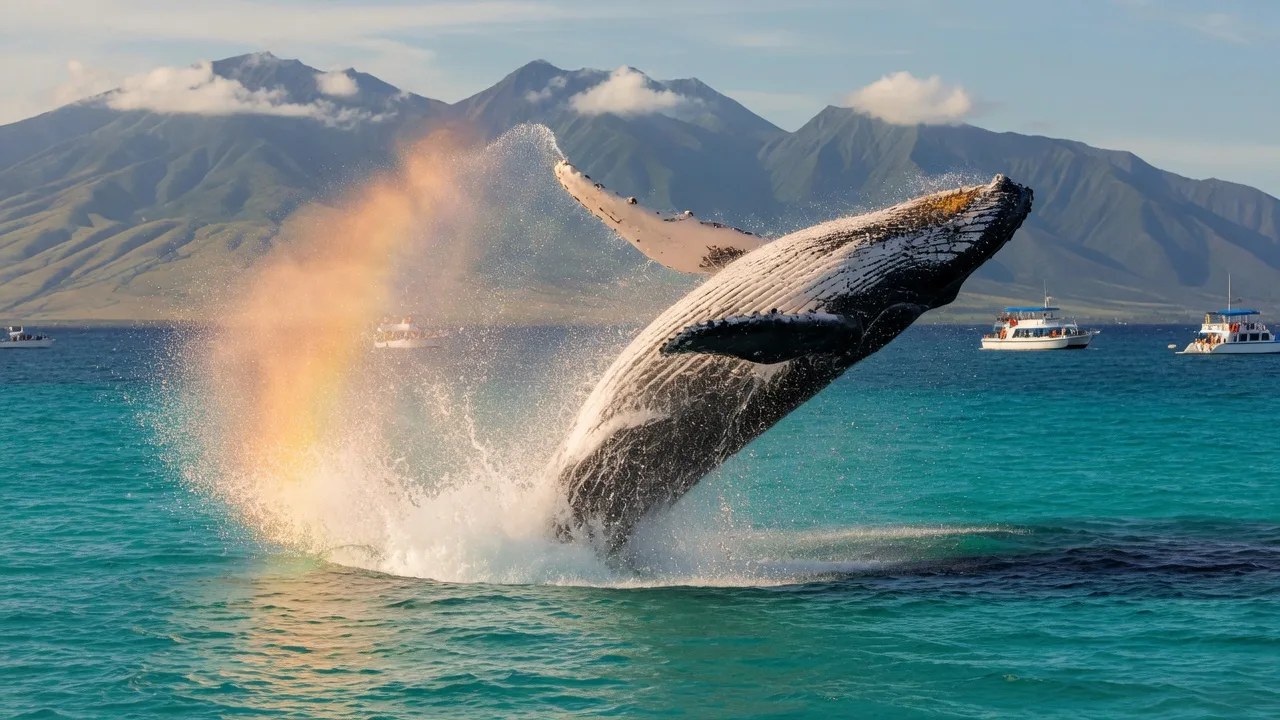
The most dramatic behavior: a whale launches its entire body out of the water and lands with a thunderous splash. Breaching happens year-round but is most common during competitive group interactions.
Spyhopping
A whale vertically pokes its head above the water to take a look around. It is a rare and mesmerizing sight that feels like a genuine encounter between species.
Tail & Pectoral Slaps
Whales slap their massive tails and long pectoral fins on the water surface repeatedly. These displays can be heard from a mile away and are often a sign of social communication or agitation.
Whale Songs
Many tour boats carry hydrophones that let you hear the haunting, complex songs of male humpbacks. These songs can last 10 to 20 minutes and travel for miles underwater.
Tyler's Tip
"January through March is the sweet spot. The whales are everywhere: you can sit on Kaanapali Beach with your morning coffee and watch them breach right off shore. No boat required. For the full experience, book a small-group tour out of Lahaina Harbor. The naturalists on board share insights you will not get anywhere else."
Plan Your Trip
Whale Watching Tips
Best Time of Day
Morning tours (7:00-10:00 AM) typically offer the calmest ocean conditions and best visibility. The afternoon trade winds can create chop that makes spotting harder. Early light also creates dramatic photo conditions.
Booking Advice
Book tours in advance during peak season (January-March). Small-group tours (under 20 passengers) offer a better experience. Most operators guarantee sightings or offer a free return trip. Bring sunscreen, a hat, and a light jacket.
Photography
Bring a zoom lens (200mm or longer) for the best whale shots. A polarizing filter cuts glare on the water. For video, keep your camera steady and shoot in 60fps for slow-motion breach replays. Leave the drone at home: drones are restricted near whales and at many beaches.
Planning Your Maui Adventure?
Tyler can help you find the perfect home base for whale season and beyond. From oceanfront condos in Kaanapali to luxury villas in Wailea.
Get in Touch