


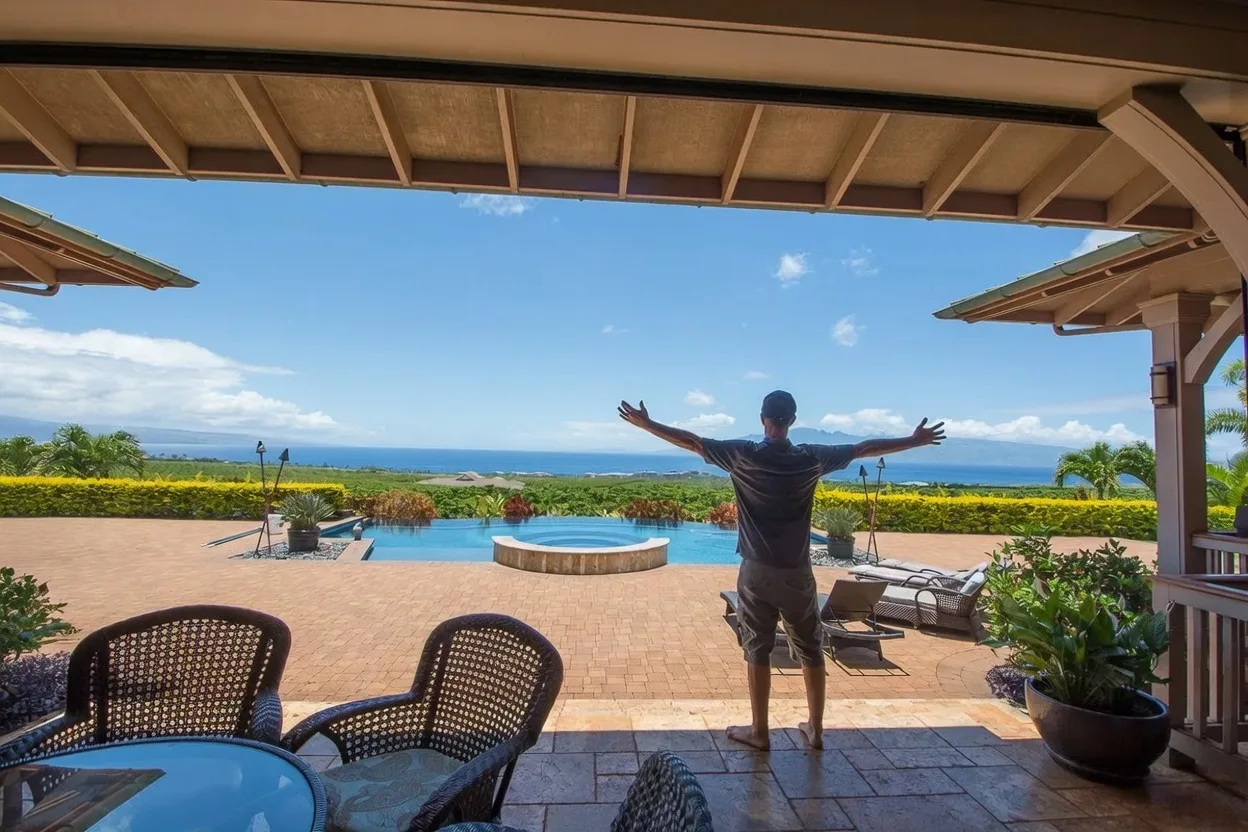
Elev 0 FT · Island Life
Living on Maui:
The Honest Truth
What you gain, what you trade, and what no one tells you before you move.
Moving to Maui is a dream for many. The reality is more nuanced. Tyler has helped hundreds of buyers make this transition, and his honest perspective comes from living it himself. Here's what you should know before packing your bags.
What You Gain
Year-Round Warmth
Average temperatures between 75-85 degrees year-round. No heating bills, no winter coats, no seasonal affective disorder. The sun shines on Maui approximately 270 days per year.
Ocean Access Every Day
From your morning surf session to evening sunset swims, the ocean is your backyard. Maui has over 30 miles of swimmable beaches, and most are accessible within 20 minutes from anywhere on the island.
A Slower, Intentional Pace
Maui runs on island time. Conversations happen in the produce aisle. Your commute is a scenic drive along the coast. Life re-prioritizes around people, nature, and experience.
Natural Beauty That Never Gets Old
Haleakala sunrise, whale watching from your lanai, rainbow-filled valleys, and bioluminescent bays. The daily scenery here is something most people see once in a lifetime.
Community and Ohana Spirit
Maui's communities are tight-knit. Neighbors know each other. Local businesses support each other. The concept of ohana runs deep in the culture and shapes how people treat one another.
Farm-to-Table Lifestyle
Maui's upcountry farms produce world-class coffee, tropical fruits, and organic produce. Farmers markets happen multiple times weekly. Fresh fish is caught daily. The food culture is extraordinary.
The Reality
Paradise Has Trade-Offs
"You'll never miss the traffic or the snow. But you will miss certain things you didn't know you valued until they were gone." Tyler Coons
What You Trade Away
Big-City Entertainment
No large concert tours, no Broadway shows, no major league sports. Maui's entertainment is nature itself, but if you crave high-profile cultural events or stadium concerts, you'll need to fly to Oahu or the mainland.
High-Profile Art Exhibitions
Major museum shows and world-class gallery rotations are limited. Maui has a vibrant local art scene, but you won't find the rotating exhibitions of a SoHo gallery or a major metropolitan museum.
Convenience and Speed
Same-day delivery doesn't exist here. Amazon Prime means three to five days. Many specialty items require ordering online. Hardware stores close early. Restaurants run out of things. Patience is a survival skill.
Cost of Living
Everything costs more. Groceries run 30-40% above mainland averages due to shipping. Gas prices are among the highest in the nation. Contractor availability is limited and expensive.
Island Restriction
You're on an island. The nearest mainland is 2,500 miles away. Getting "off" requires a flight. Some people feel this as freedom, others as a constraint. Know yourself honestly.
Healthcare Limitations
Maui Memorial is the primary hospital. For specialized care, many residents fly to Honolulu or the mainland. Dental and specialist wait times can be longer than you're used to.
The Big Picture
What Is It Really Like Living on Maui Full Time?
The short answer: it is extraordinary and it is hard in ways you do not expect. The long answer is what this entire page is about, but here is the honest summary.
Living on Maui full time means waking up to weather that is comfortable every single day. It means the ocean is always a short drive away. It means your idea of a bad day still involves a view that most people only see on vacation. The natural beauty does not fade with familiarity. The whales still stop you in your tracks every December. The sunrise over Haleakala still feels like a privilege.
But it also means paying significantly more for groceries, gas, and housing. It means living with the reality that the nearest Trader Joe's or Costco requires a flight to Honolulu if you need something specific. It means accepting that island time is real and schedules are looser. It means your Amazon packages take a week. It means knowing that for certain medical specialists, you will fly to Oahu or the mainland. It means the pace of life slows down, and that is a gift for some and a frustration for others.
What no one tells you: the people who thrive on Maui are the ones who embrace the limitations as part of the trade. They do not fight island time. They do not complain about shipping costs. They adapt. If you come here expecting mainland convenience with a Hawaiian backdrop, you will be disappointed. If you come here ready to live a slower, more intentional life, you will never want to leave.
The Numbers
Cost of Living on Maui vs Mainland US
This is the question every potential mover asks. The honest answer is that Maui is significantly more expensive than the mainland in almost every category, but the gap is not uniform across all expenses.
Housing
The biggest cost by far. The median single-family home price on Maui is well over $1 million. Condos start in the $400,000s for a one-bedroom in Kihei and go up to several million in Wailea or Kapalua. Rent is equally steep: a two-bedroom apartment in a desirable area runs $3,000 to $5,500 per month. Compared to a mainland city like Austin or Denver, you are paying 40-60% more for comparable square footage. Compared to San Francisco or Manhattan, the pricing is competitive but the inventory is much smaller.
Groceries & Food
Groceries run 30-40% above mainland averages because nearly everything is shipped in. Milk can be $8 a gallon. A dozen eggs runs $6-8. Produce from the mainland costs a premium, though local farmers markets offer excellent fresh fruit and vegetables at better prices. Eating out is also expensive: a casual dinner for two with drinks is $80-120, and fine dining at a resort restaurant easily exceeds $200 per person.
Utilities & Energy
Electricity on Maui is among the most expensive in the nation, at roughly 40-45 cents per kilowatt-hour. This is because most power comes from imported oil. Summer air conditioning use can drive monthly electric bills past $400 for a modest home. Gas for vehicles is also consistently 30-40% higher than the mainland average. Water is more reasonable, and many homes use solar water heaters to offset electric costs.
Transportation
Gas prices are among the highest in the nation, currently $1.00-1.50 more per gallon than the mainland average. Car registration is expensive. Public transit is limited to the Maui Bus system, which does not cover the entire island. Most residents need a car, and car maintenance is pricier due to limited competition among mechanics. One upside: your daily commute is short, and many people drive far fewer miles per year than they did on the mainland.
The Bottom Line
A general rule: you need a household income of roughly $120,000 to $150,000 to live comfortably on Maui as a renter, and $180,000 or more if you are buying a home. That sounds high, but many residents point out that lifestyle costs are lower: you spend less on entertainment, seasonal clothing, and heating. The money you save on a winter coat budget goes into your electric bill instead.
Family Life
Best Towns to Live in on Maui for Families
For families, the right town depends on your priorities: school quality, commute to work, access to activities, and community feel. Here is how the top family-friendly areas stack up.
Kihei
The most popular choice for families moving to Maui. Kihei offers the largest concentration of affordable housing (by Maui standards), the most consistent sunny weather, and the best public school options in South Maui through Kamalii Elementary and Kihei Charter School. The town has multiple grocery stores, pediatricians, sports leagues, and a community center. Beaches are calm and swimmable year-round, perfect for kids. The trade-off: Kihei is growing fast and traffic on South Kihei Road can be frustrating during peak hours.
Makawao
Upcountry's most family-friendly town. Makawao has a strong community feel, excellent schools like Makawao Elementary and Kalama Intermediate, and the highest-rated public high school on the island, King Kekaulike. The cooler elevation means less need for air conditioning, lower electric bills, and more space for kids to play outdoors. Families love the paniolo (Hawaiian cowboy) culture, the weekly farmers market, and the proximity to hiking trails in Makawao Forest Reserve. The downside: a longer commute to beach towns and resort jobs.
Kahului
Maui's central hub and most affordable family area. Kahului has the best access to shopping, the airport, medical facilities, and job centers. Schools include the highly regarded Maui Waena Intermediate and Baldwin High School. The town gets less tourist attention, which means more normal everyday life for families. The trade-off: Kahului is not as scenic as other areas, and it feels more like a working town than a resort destination.
Haiku
For families who want space and nature. Haiku offers larger lots, a rural feel, and a tight-knit community of farmers, artists, and surfers. Haiku Elementary has an excellent reputation. Kids grow up with access to the North Shore's beaches, the bamboo forests of the Piilani Trail, and the kind of free-range childhood that is rare on the mainland. The trade-off: rain is frequent, the commute to Central Maui jobs is 30-45 minutes, and services are limited.
Retirement
Is Maui a Good Place to Retire?
Yes, for the right person. Maui is a fantastic retirement destination for people who have the financial resources, the right temperament, and realistic expectations. But it is not for everyone, and the decision deserves honest consideration.
The upsides for retirees: The weather is perfect for an active outdoor lifestyle year-round. Golf is exceptional with multiple world-class courses. The community is warm and welcoming to new residents. The pace of life naturally encourages relaxation. Hawaii's healthcare system through Kaiser Permanente and Hawaii Pacific Health is well-regarded, and Maui Memorial Medical Center has been improving its services. There is no state income tax on most retirement income, and property taxes for owner-occupied homes are among the lowest in the nation.
The downsides to consider: The cost of living is a real factor for retirees on a fixed income. Housing is expensive, and healthcare costs are higher than the mainland average. For specialized medical care, you will need to travel to Honolulu or the mainland. Social opportunities are more limited than a large retirement community in Florida or Arizona. Some retirees find the isolation of island life challenging after a few years, especially if family visits require expensive flights.
Who thrives here: Retirees who are active, self-sufficient, and financially comfortable. People who love the outdoors, enjoy a slower pace, and are not dependent on frequent family visits. Retirees who want to stay engaged in the community, volunteer, and make new friends. The best advice: rent for a year before buying. The island's rhythm is not for everyone, and a trial run is far cheaper than a costly mistake.
The Decision
Pros and Cons of Moving to Maui
A balanced, honest look at the biggest factors that will shape your experience.
Pros
- + Incredible natural beauty that becomes part of your daily life. Every drive is scenic, every sunset is an event.
- + Year-round warm weather enables an outdoor lifestyle: hiking, swimming, surfing, golf, and gardening every single day.
- + Strong sense of community. Neighbors know each other. Local businesses support each other. The ohana spirit is real.
- + Slower, healthier pace of life. Less stress, less rush, more time for what matters.
- + No state income tax on most income and low property taxes for owner-occupied homes.
- + Farm-to-table food culture. Fresh fish daily, tropical fruit year-round, and excellent farmers markets.
- + Safe environment. Maui has low violent crime rates compared to most mainland cities of similar size.
Cons
- - High cost of living. Everything from groceries to utilities to housing costs significantly more than the mainland.
- - Geographic isolation. The nearest major city is Honolulu, a 30-minute flight away. The mainland is 2,500 miles across the Pacific.
- - Limited job market. The economy is dominated by tourism, hospitality, and healthcare. Professional salaries are often lower than the mainland.
- - Healthcare limitations. Maui Memorial is the primary hospital. Specialists are limited, and complex care requires travel.
- - Traffic congestion. The island's infrastructure was not built for its current population. Key bottlenecks are real.
- - Tourist crowds. Peak seasons bring heavy visitor traffic, especially in Kihei, Lahaina, and the Road to Hana.
- - Limited shopping and entertainment. No IKEA, no major concert venues, no professional sports. Online shopping takes patience.
Career
How to Find a Job on Maui
Finding a job on Maui is the hardest part of the move for most people. The island's economy is small, and the job market is competitive. Here is the honest picture and practical advice.
The reality: Maui's economy is driven by tourism, hospitality, healthcare, construction, and education. Professional services, technology, and high-paying corporate jobs are limited. Salaries are often 10-20% lower than the mainland for comparable roles, while the cost of living is 30-40% higher. This is the single biggest economic challenge of living on Maui. Many residents work multiple jobs or have side hustles to make it work.
The best strategy: Secure a job before you move. Ideally, bring a remote job with a mainland salary. This is the single most common path for successful transplants. The island's excellent internet infrastructure (especially in Kihei, Wailea, and upcountry areas) makes remote work viable. Healthcare professionals, teachers, and skilled trades remain in high demand. For hospitality, the major resorts at Wailea, Kaanapali, and Kapalua are the largest employers.
Key job sectors: Hospitality and tourism (hotels, restaurants, tour operators) account for the largest share of employment. Healthcare is a growing sector with Maui Health, Kaiser Permanente, and private practices. Construction is active due to ongoing development. Education is stable through the Hawaii Department of Education. Remote work across tech, marketing, finance, and creative fields is the fastest-growing segment, and it is the most sustainable path for newcomers.
Networking matters: Maui is a relationship-based community. Many jobs are filled through word of mouth before they are ever posted. Join local business groups, attend chamber of commerce events, and get involved in the community. The Maui Economic Development Board and the University of Hawaii Maui College are excellent resources for career connections.
Getting Around
Maui Traffic and Commute Times: Is It Bad?
Let's be honest: yes, Maui has traffic problems, and they are worse than most people expect. The island's road network was designed for a fraction of its current population, and there are only a few main arteries.
The worst bottlenecks: The Kahului-to-Kihei corridor (Highway 311, known as the Piilani Highway) is the island's most congested route, especially during morning and evening commutes. The drive from Kihei to Kahului that takes 15 minutes with no traffic can stretch to 40-50 minutes during peak hours. The Lahaina Bypass in West Maui and the Nakalele Point Road also see heavy tourist traffic. The intersection of Dairy Road and Hana Highway in Kahului is a daily frustration for commuters.
Typical commute times: Kihei to Kahului (the most common commute) is 15-20 minutes without traffic, 30-45 minutes during peak hours. Upcountry (Makawao/Pukalani) to Kahului is 20-25 minutes without traffic, 35-40 minutes during rush. Kaanapali/Lahaina to Kahului is 35-40 minutes without traffic, 50-60 minutes during peak. Haiku to Kahului is 25-30 minutes without traffic, 35-40 minutes during rush.
The upside: Compared to gridlock in Los Angeles, Seattle, or Honolulu, Maui's traffic is still manageable. The worst commute on the island is rarely more than 45 minutes, and the drive itself is beautiful. Many residents choose to live near their work to avoid the commute entirely. Remote workers have the biggest advantage: they can live anywhere and avoid peak traffic altogether.
Remote Work
Best Maui Neighborhoods for Remote Workers
Remote workers are the fastest-growing demographic on Maui, and for good reason: a mainland salary paired with island living is the most sustainable financial model. Here are the best neighborhoods for the work-from-home lifestyle.
Kihei
The most popular choice for remote workers. Kihei has excellent internet infrastructure (fiber available in most neighborhoods), the largest concentration of rental properties, and the best weather on the island. Co-working spaces like The Maui Beach Coworking and Impact Hub Maui provide professional work environments. After work, the beach is a two-minute walk. The trade-off: it is the most congested part of the island and tourist traffic is a daily reality.
Upcountry (Makawao, Pukalani, Kula)
Ideal for remote workers who want space, quiet, and cooler temperatures. Fiber internet is available in most upcountry areas. Homes tend to have more square footage, larger lots, and dedicated home office space. The views are spectacular, the community is tight-knit, and the pace of life is even slower than the coast. The trade-off: longer drives to beaches, restaurants, and shopping, and the weather is cooler and rainier than South Maui.
Wailea
The luxury option. Wailea offers high-end condos and homes with dedicated office spaces, resort-level amenities, and the island's best internet. The Wailea-Makena area has fiber infrastructure and the quiet, gated communities are conducive to focused work. After hours, you have world-class golf, tennis, and walking trails. The trade-off: it is the most expensive area on the island, and it can feel resort-centric rather than like a real neighborhood.
Haiku
For remote workers who want to be surrounded by nature. Haiku's rural character means larger properties, more privacy, and a creative community. Starlink and fiber internet are both available. The North Shore beaches are uncrowded, and the lush jungle setting is inspiring. The trade-off: rain is frequent, drive times to services are longer, and the road to Haiku is winding and slow.
Pro Tip
Whatever neighborhood you choose, test your internet connection before signing a lease. Schedule a walkthrough with a video call to test real-world speeds. Some older buildings in Kihei still have DSL-only connections, while newer developments in Wailea and upcountry have gigabit fiber. For remote workers, this is the single most important factor in your housing decision.
Ready to Decide?
Talk to Someone Who Lives It
Tyler Coons has helped hundreds of buyers navigate this exact decision. His honest, insider perspective will help you know if Maui is truly your next home.
Get in Touch