

Climate · Weather
Maui Weather Guide
What to expect by season, and why two sides of the same island feel like different worlds.
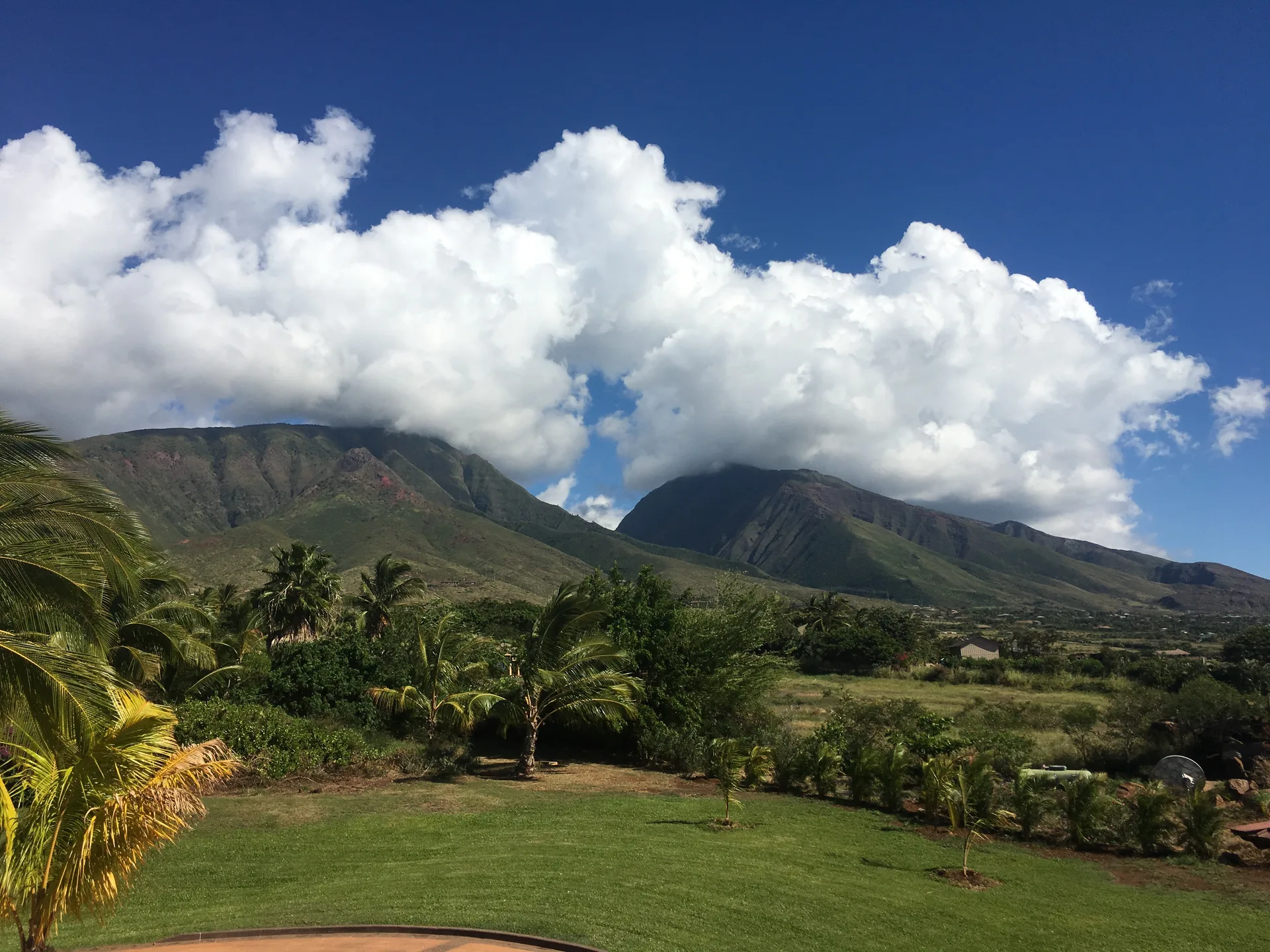
Maui's weather is defined by its microclimates. The island's volcanic topography, ranging from sea level to 10,023 feet at Haleakala's summit, creates dramatic variations in temperature, rainfall, and sunshine across very short distances. Understanding these microclimates is essential for choosing where to live and what to expect year-round.
Weather by Season
Winter
December - MarchTemp
72-80°F
Rainfall
Wet season
The "wet" season brings the majority of Maui's rainfall, but it's concentrated on the windward (north and east) sides. Leeward resort areas like Wailea and Ka'anapali see the least rain. North shore surf picks up significantly. Whale watching season brings cooler ocean breezes. Big wave season at Pe'ahi (Jaws) peaks in January and February.
Spring
April - MayTemp
74-82°F
Rainfall
Transition
The sweet spot. Rain tapers off, visitor crowds thin, and temperatures are warm but not hot. Waterfalls are still running full from winter rains. Excellent snorkeling visibility as ocean conditions calm. Upcountry wildflowers are in bloom.
Summer
June - AugustTemp
78-88°F
Rainfall
Dry season
The hottest and driest period on Maui. South and west shores are reliably sunny with temperatures reaching the high 80s. The trade winds provide natural cooling. Summer ocean conditions are generally calm on the south shore, making it prime snorkeling season. North shore gets occasional south swell.
Fall
September - NovemberTemp
76-84°F
Rainfall
Transition
The warmest ocean temperatures of the year (80-82°F). The calmest water conditions, ideal for snorkeling and diving. September is historically the most hurricane-aware month, though direct hits are extremely rare. October and November bring the first winter swells.
Microclimates
Two Sides of the Same Island
Maui's volcanic mountains create a rain shadow effect. The windward (north and east) sides catch moisture-laden trade winds, while the leeward (south and west) sides sit in a dry, sunny shadow. The difference can be dramatic.
Wailea / Kihei
Rain
12-15 inches/year
Sun
300+ sunny days
The driest, sunniest corridor on Maui. Leeward position in the rain shadow. Warm, dry weather year-round with temperatures typically 5-8 degrees warmer than upcountry.
Kaanapali / Lahaina
Rain
12-15 inches/year
Sun
280+ sunny days
Similar to Wailea, West Maui's leeward coast enjoys abundant sunshine. Afternoon trade winds provide natural cooling. Rarely receives significant rainfall.
Paia / North Shore
Rain
25-40 inches/year
Sun
Moderate
The windward side catches trade wind moisture. More rain, more green, more dramatic skies. Paia itself sits in a partial rain shadow and is drier than surrounding areas.
Kula / Upcountry
Rain
30-50 inches/year
Sun
Variable
Elevation changes everything. Kula sits at 1,000-5,000 feet with cooler temperatures (60-75°F year-round). Morning fog and afternoon clearing is common. Significantly cooler than the coast.
Hana / East Maui
Rain
80-120 inches/year
Sun
Limited
One of the wettest spots in Hawaii. Hana receives 100+ inches of rain annually, creating lush tropical rainforest. Temperatures remain warm but conditions are frequently overcast and misty.
Haiku / North Upcountry
Rain
40-60 inches/year
Sun
Variable
Lush and green with significant rainfall. Cooler than the coast, warmer than Kula at higher elevations. Morning fog often burns off by midday, revealing ocean views.
Find Your Climate
Weather varies enormously across Maui. Tyler can help you find a community that matches your ideal climate, whether you want endless sunshine or cool upcountry mist.
Discuss Your Preferences